Drivers with older cars will pay more Vehicle Excise Duty from April 10. Cars registered from April 2017 onwards will see their annual road tax go up. The amount you pay depends on your fuel type and when the car was registered and its CO2 emissions. The government website explains that the current VED structure using CO2 bands started in 2001 when average UK new car emissions were 178 gCO2/km. The new VED system keeps the CO2-based first year rates to encourage people to buy cleaner cars while using a flat standard rate to make the tax fairer & simpler.
The Express reports that nearly every petrol and diesel & electric vehicle owner will face higher bills from April when updated Vehicle Excise Duty rates take effect. According to the regulations older road users must pay the same charges as all other drivers across the UK with no age-related concessions available. Those most affected are people who registered a car from April 10 2017 who will see their car tax rise from £195 to £200. The gov.uk website says this measure reforms Vehicle Excise Duty for cars first registered from 10 April 2017 onwards.


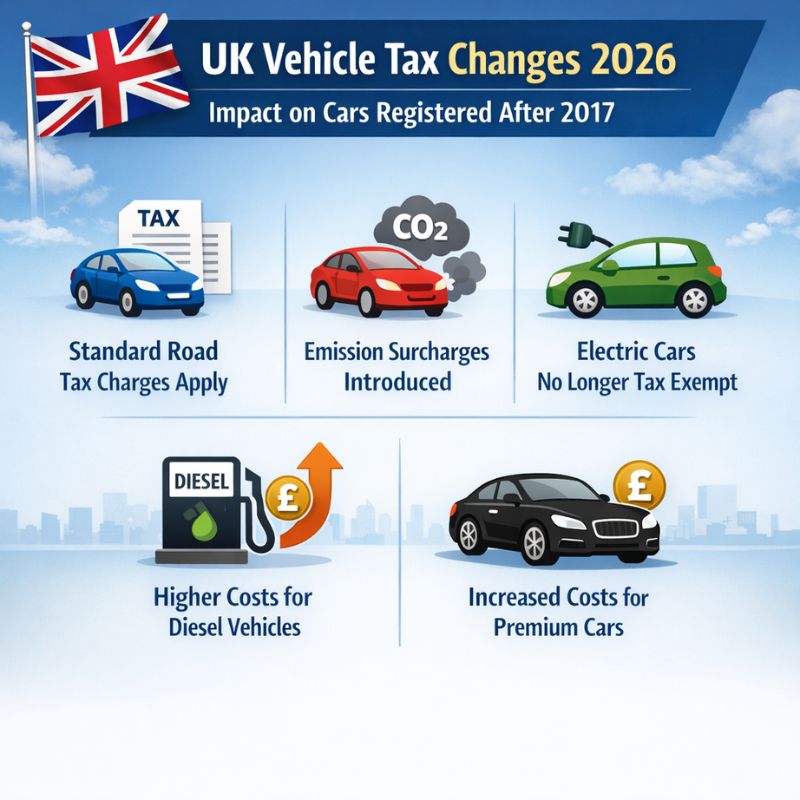
First Year Rates of VED will vary according to the carbon dioxide emissions of the vehicle. A flat Standard Rate of £140 will apply in all subsequent years except for zero-emission cars which will be £0. Cars with a list price above £40,000 will attract a supplement of £310 on their standard rate for the first five years in which a standard rate is paid. All cars first registered before April 10 2017 will remain in the current VED system which will not change.
 DWP £295 Benefit Increase 2026: Extra Payments Roll Out to 4 Million Households From Monday
Drivers who will face the biggest impact are those who purchase new petrol & diesel cars with VED charges rising by £200 going from £5,490 to £5690. If you buy a new car you pay what is known as the showroom tax for your first year. If the vehicle emits between 1-50g/km of CO2 the first-year car tax rate after April 2026 will rise from £110 to £115. These rates only apply for the first year you own the car. From the second year onward you pay the standard car tax rate which is rising from £195 to £200.

New first year car tax rates from April 10
- 0g/km – £10 (no change)
- 1-50g/km – £115
- 51-75g/km – £135
- 76-90g/km – £280
- 91-100g/km – £365
- 101-110g/km – £405
- 111-130g/km – £455
- 131-150g/km – £560
- 151-170g/km – £1,410
- 171-190g/km – £2270
- 191-225g/km – £3,420
- 226-255g/km – £4,850
- 255+g/km – £5,690
For cars registered before 2017 the rates are different as they are split into different CO2 bands where vehicle tax will be lower if the emissions also are.

Car tax from April 2026 for cars registered between March 1 2001 and March 31 2017
- Up to 100g/km – £20 (no change)
- 101-110g/km – £20 (no change)
- 111-120g/km – £35 (no change)
- 121-130g/km – £170
- 131-140g/km – £200
- 141-150g/km – £225
- 151-165g/km – £275
- 166-175g/km – £325
- 176-185g/km – £360
- 186-200g/km – £410
- 201-225g/km – £445
- 226-255g/km – £760
- 255+g/km – £790