Drivers of petrol and diesel & electric company cars face new tax charges starting today. From Monday April 10 2026 updated Benefit-in-Kind tax rates will affect thousands of company car drivers across the country.

Most vehicle bands based on emissions output will stay at their 2025/26 rates but many drivers will pay more than before. Electric company car drivers will see their costs go up as the BiK rate for EVs with over 130 miles of range increases from three percent to four percent. A basic rate taxpayer with a £40000 electric car will see monthly costs rise from £20 to roughly £26.67.


The government is keeping rates relatively low to encourage drivers to switch from petrol & diesel to electric vehicles. Chancellor Rachel Reeves approved a temporary easement for plug-in hybrid vehicles in the Autumn Budget. This easement runs from January 1 2025 until April 10 2028 and prevents tax charges from rising too much due to new emissions standards.

The most polluting petrol and diesel vehicles that emit more than 170g of CO2 per kilometre stay on the highest 37 percent BiK rate. Additional changes planned for April 10 2026 would have brought Employee Car Ownership Schemes under BiK rules but the Chancellor delayed implementation until April 2030 with transitional arrangements until April 2032.
 DVLA Enforcement Update 2026: Thousands of Driving Licences Cancelled After Medical Condition Checks
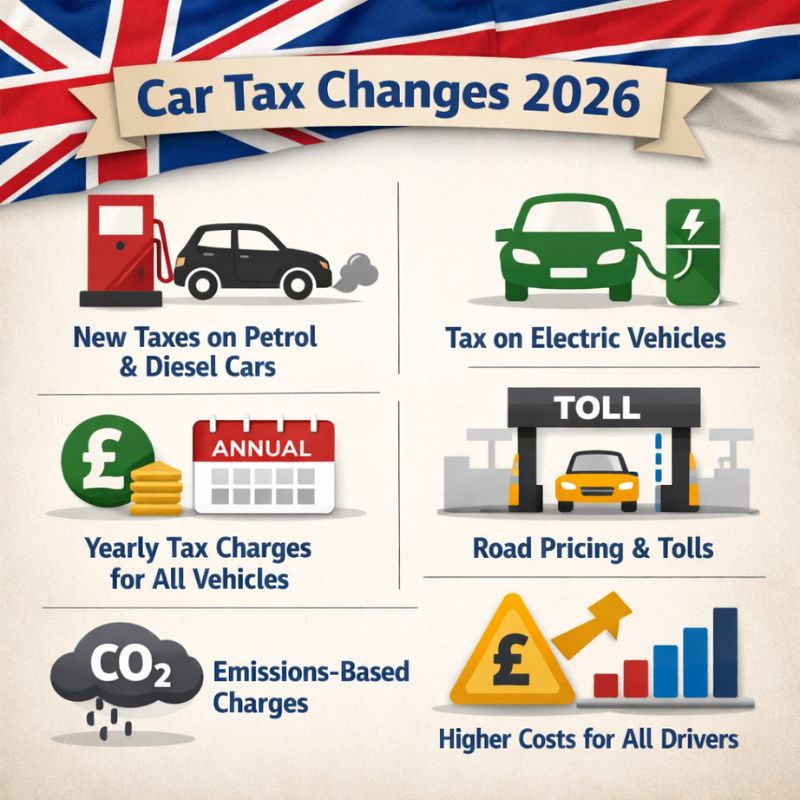
New Company Car Tax Rates from April 10 2026
- 0g/km – Rising from three per cent to four per cent
- 1-50g/km (more than 130 miles of electric range) – Rising from three per cent to four per cent
- 1-50g/km (70-129 miles of electric range) – Rising from six per cent to seven per cent
- 1-50g/km (40-69 miles of electric range) – Rising from nine per cent to 10 per cent
- 1-50g/km (30-39 miles of electric range) – Rising from 13 per cent to 14 per cent
- 1-50g/km (less than 30 miles of electric range) – Rising from 15 per cent to 16 per cent
- 51-54g/km – Rising from 16 per cent to 17 per cent
- 55-59g/km – Rising from 17 per cent to 18 per cent
- 60-64g/km – Rising from 18 per cent to 19 per cent
- 65-69g/km – Rising from 19 per cent to 20 per cent
- 70-74g/km – Rising from 20 per cent to 21 per cent
- 75-79g/km – Remains at 21 per cent
- 80-84g/km – Remains at 22 per cent
- 85-89g/km – Remains at 23 per cent
- 90-94g/km – Remains at 24 per cent
- 95-99g/km – Remains at 25 per cent
- 100-104g/km – Remains at 26 per cent
- 105-109g/km – Remains at 27 per cent
- 110-114g/km – Remains at 28 per cent
- 115-119g/km – Remains at 29 per cent
- 120-124g/km – Remains at 30 per cent
- 125-129g/km – Remains at 31 per cent
- 130-134g/km – Remains at 32 per cent
- 135-139g/km – Remains at 33 per cent
- 140-144g/km – Remains at 34 per cent
- 145-149g/km – Remains at 35 per cent
- 150-154g/km – Remains at 36 per cent
- 155-159g/km – Remains at 37 per cent
- 160-164g/km – Remains at 37 per cent
- 165-169g/km – Remains at 37 per cent
- Over 170g/km – Remains at 37 per cent