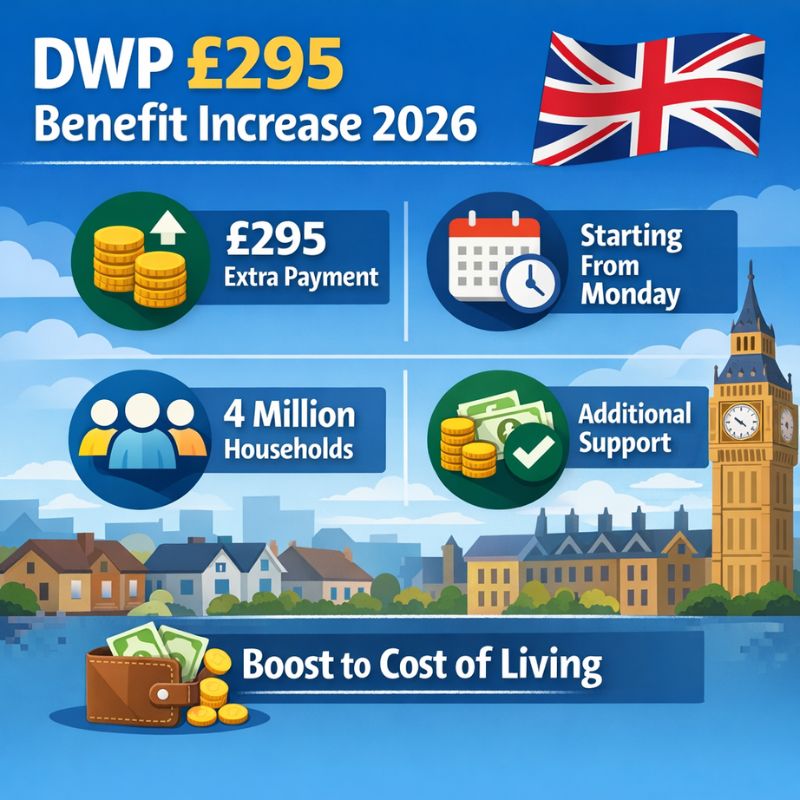
The DWP is giving 4 million households an extra £295 in Universal Credit benefits starting Monday April 6 through a rebalancing of the benefit system. The government is increasing Universal Credit payment rates for 2026-27 to help households struggling with the cost of living crisis.

Save The Children reports that 59% of households claiming Universal Credit are working & need the extra income from the benefit to manage their expenses. Starting Monday April 10 2026 Universal Credit is increasing by £295 annually for the basic rate and will be worth £760 extra by the end of the decade. At the same time the Universal Credit Health Element is being reduced by almost half from £429.80 to £217.26 for new claimants as the government tries to control the rising welfare bill especially for health-related claims.


From Monday the Universal Credit standard allowance will increase from £316.98 per month to £338.58 for a single person under 25 & will rise from £400.14 to £424.90 for a single person aged 25 or over. For couples the rates will increase from £497.55 to £528.34 if under 25 & for those over 25 the rate will go up from £628.10 per month to £666.97.

These rates do not include supplements like the Child Element which will no longer be limited to two children as the two-child benefit cap for Universal Credit is also being removed from Monday. The Child Element adds £351.88 per month for the first child and £303.94 for each additional child and this is no longer limited to two children though it is still subject to the overall benefits cap for households.

When announcing the changes last summer the DWP said nearly 4 million households will see an annual income boost estimated to be worth £725 as a Bill to overhaul the welfare system completes the next stage of its passage through Parliament. This is the highest permanent real terms increase to the main rate of out-of-work support since 1980 according to the IFS. Reforms outlined in the Universal Credit Bill will rebalance the core payment and health top up in Universal Credit. This will address the fundamental imbalance in the system which creates perverse incentives that drive people into dependency.