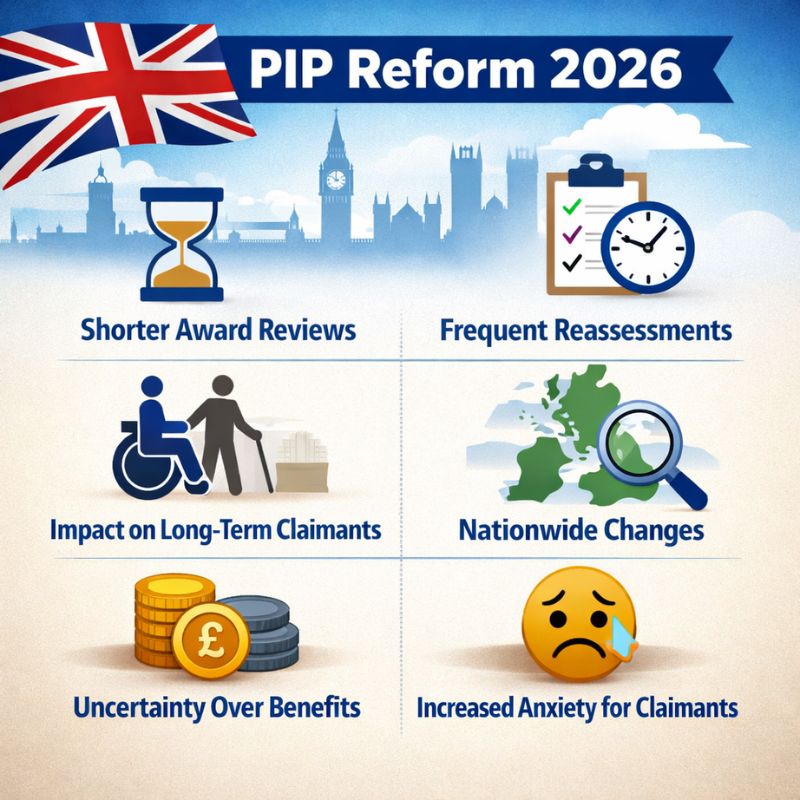
The UK Government is changing how it reviews benefit payments. Starting in April it plans to extend award durations for people making new Personal Independence Payment claims. The change aims to reduce the Work Capability Assessment backlog.

The Department for Work & Pensions says this will let healthcare professionals do more face-to-face evaluations and complete more WCA reassessments. Right now the time between PIP award reviews can be as short as nine months. Most claimants see no change to their award when reviewed. This will be extended for most PIP recipients aged 25 and over to at least three years for new claims.

It will increase to five years at their next review if they still qualify. These operational changes are separate from the Timms Review. That review will look at how PIP works and the qualifying criteria for daily living & mobility components. It will also examine the assessment process & how these elements help disabled people achieve better health outcomes and greater independence.
 DVLA Enforcement Update 2026: Thousands of Driving Licences Cancelled After Medical Condition Checks

The April measure will happen at the same time as Universal Credit changes that reduce the gap between payments for unemployment and long-term illness. The changes will help the UK Government meet a promise from the Pathways to Work Green Paper about increasing face-to-face assessments after they stopped during the COVID-19 pandemic. The previous government had agreements requiring 80 percent of evaluations to be done remotely. The number of in-person assessments will increase substantially.
PIP assessments will go from 6 percent in 2024 to 30 percent of all evaluations. The WCA will increase from 13 percent in 2024 to 30 percent. The UK Government says it is making these changes & reforming the welfare system it inherited. It is extending the time between assessments that check whether a claimant still qualifies for PIP. This allows healthcare professionals to do more face-to-face evaluations and complete more WCA reassessments.
 UK State Pension Increase 2026: Payments Rise by Up to £575 but Millions May Miss Full Amount
The government added that reassessments play an important role in accounting for how changes in health conditions and disabilities affect people over time. The policy changes are expected to save UK taxpayers £1.9 billion by the end of 2030/31. This comes alongside employment programs targeting sick or disabled people including Connect to Work and the reallocation of 1000 work coaches.
Secretary of State for Work and Pensions Pat McFadden recently said the government is committed to reforming the welfare system it inherited. He said the system has written off millions as too sick to work for too long. He explained they are increasing the number of face-to-face assessments and taking action to tackle the backlog of people waiting for a Work Capability Assessment. These reforms will save £1.9 billion & create a welfare state that supports those who need it while helping people into work and delivering fairness to taxpayers.